



















Will Underwater Finishes Emerge as Viable Option? College Coaches Share Their Thoughts
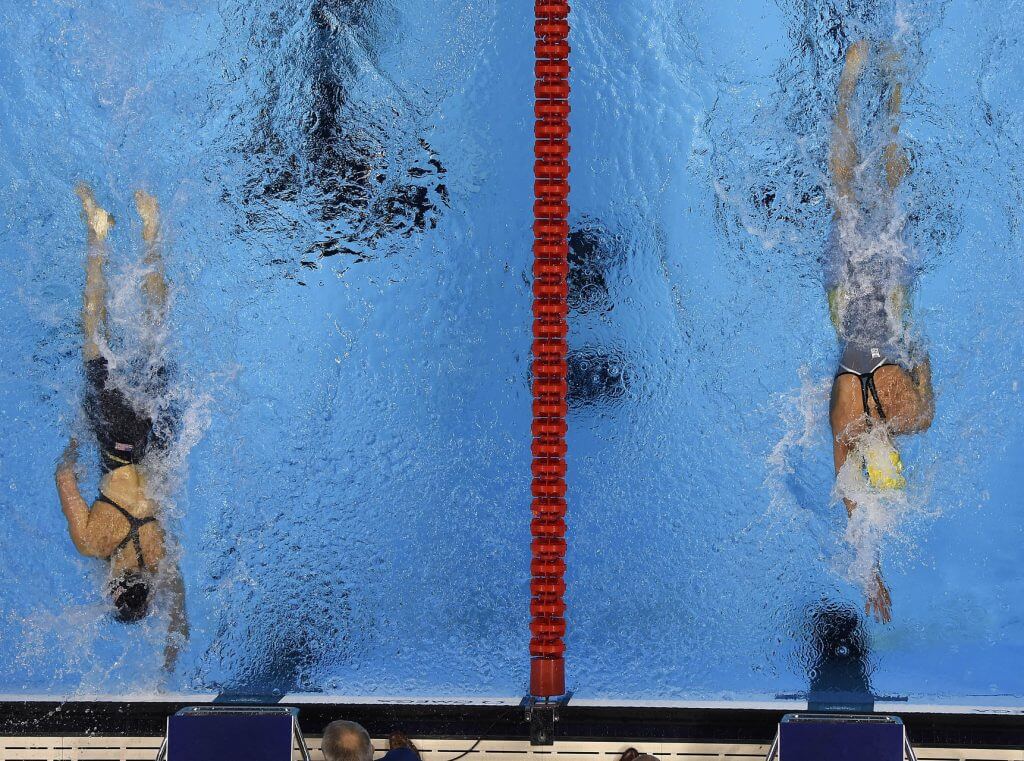
The last five meters of every swim, no matter the race, are always appointment television. Waves catapult across the pool as the athlete charges toward the wall. Their energy fully expended, athletes battle for relief from the race’s pressures. And whether it’s a best time, beating a competitor or winning the event, there’s always an outcome for their exertion.
Throughout college swimming’s 125-year history, seeing who gets their hand on the wall first has captivated fans. This fall, a critical piece of the sport could look slightly different.
The NCAA announced its latest rule changes this August, among them a shift in how swimmers can finish their races. Under the new bylaws, “once some part of the head has passed the five-meter mark,” the athlete can dive underneath the water and submerge themselves before reaching the wall. This rule applies to every stroke outside of breaststroke.
Questions arise from the change. Could we see faster finishes than ever before? How will the rule be legislated across college swimming?
How Did This Change Emerge?
The NCAA isn’t the first governing body to introduce the change in how swimmers finish their races. Both World Aquatics and USA Swimming previously adapted the rule, allowing swimmers to finish submerged for the last five meters.
Despite the rule previously existing, most NCAA coaches cited a lack of familiarity with swimmers utilizing it in meets. That sentiment was reflected at the biggest meets of the summer. All swimmers in the butterfly and freestyle finals at both the Pan Pacific Championships and U.S. Nationals, stayed on the surface of the water as they finished.
“I’m always open-minded, but this just isn’t something that I’ve seen at any level,” Indiana coach Ray Looze said.
So if the rule hasn’t been popularized internationally, why is it making its way to the NCAA? The likely purpose, as pointed out by Mickey Wender, head coach at Division II powerhouse Colorado Mesa, is to “make things clearer for the officials.” Under the previous rule, swimmers would be disqualified for submerging too early on a finish, as they look to extend and touch the wall. It’s possible that this could lead to a similar situation to the disqualification of Justin Ress in 2021, which caused World Aquatics to similarly change its rule on backstroke finishes.
Avoiding situations like Ress’ would be a plus for the NCAA. According to many of the coaches, though, the rule changes for the backstroke finish haven’t changed finishes much either.
“Swimmers really aren’t taking advantage of (being able to kick five meters underwater on the finish), even during backstroke,” USC coach Lea Maurer said. “We’ve had people try to use it, but none fall in love with it.”
When it comes to the 2026-27 season, it seems the majority feel the rule change isn’t going to make a large difference.
“I just don’t see this being something someone is going to test (in a race),” Looze said.
Some Coaches Point to Potential
While the consensus is that the rule change will not greatly affect the NCAA season, there is some excitement around exploring the possibilities of an underwater finish. Most coaches pointed to implementing some form of underwater dive into their typical sets, in order to simulate the finish.
“We’ve certainly got a few ideas to experiment with,” said Gregg Parini, head coach for Division III national champion Denison. The coach pointed specifically to a focus on ensuring that the swimmers submerge smoothly, wanting to avoid frontal drag as they dive underwater.
“We want to make sure if we do try this method, it’s a fluid process as they transition from taking strokes into kicking, to make it faster,” he said.
The “fluidity” of that transition was the reason many coaches believed the finish could be best for butterflyers. They pointed to the mechanics of the butterfly stroke making it an easier transition to dive underwater, in comparison to freestyle.
“We’ve definitely had more butterflyers intrigued by the rule change (than freestylers),” Maurer said. “If they’re naturally going down (at the end of their butterfly recovery), it just makes more sense.”
Parini agreed, referring to the difficulty of diving underwater with only one arm extended out in front.
“In butterfly, both arms enter at the same time,” he said. “Whereas in freestyle and backstroke, they’re not in the streamline position.”
The coaches questioned which types of races the finish would fit best. Sprint races, mid-distance races, and distance races all create varying levels of fatigue on an athlete, potentially affecting the efficacy of the finish.
Answers varied, with most coaches unsure of which races were best suited for the finish. Parini specifically cited an interest in exploring the 200 fly.
“The last five meters of that race are basically just survival,” he said. “I know of a few 200 flyers who would really benefit from leaning into their kick as an advantage.”
An Opportunity for a Select Few
As the coaches experiment with the finish throughout the season, curiosity exists about its speed. Nevertheless, they emphasized it would take a special type of swimmer to make the rule effective.
“You’d have to be an exceptionally good underwater kicker to make this work,” Looze said.
Parini agreed. But he was also optimistic, reflecting on the implications of the change for some of the nation’s elite underwater kickers.
“I think about an Ilya Kharun, who’s so dynamic in what he’s able to do underwater,” he said. “You have to wonder what this might mean for a swimmer like him in a 50 fly.”
It’s a trend to watch over the next couple years, as the world’s best swimmers respond to a potential advantage.
“There’s certainly merit to this being explored, and we have plenty of time to investigate it,” Maurer said.