




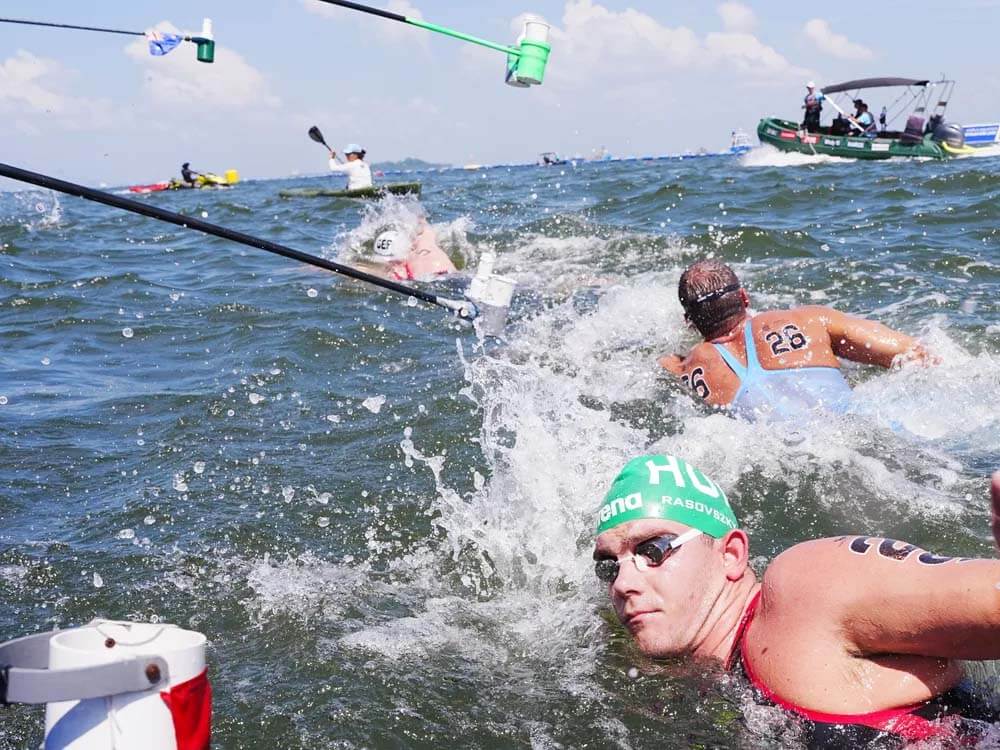















Open Water Swimming: Filling the Gap
No lane lines, no walls, no perfectly controlled environment. Just athletes, water, and the elements.
For years, swimming has unintentionally created a divide between the two disciplines: pool swimming and open water swimming. Pool swimming sits at the center of coverage, with consistent race previews, live updates, athlete features, and post-meet analysis. Open water, despite being an Olympic event with many talented stars, is often treated as an afterthought. That gap in attention is not a reflection of the athletes or the competition. It is a reflection of how we as a whole represent the sport.
If the goal is to elevate open water, the solution is not complicated. Provide media coverage like the national event that it is.
When a national team is decided after a pool competition, it is announced, shared, and celebrated across numerous platforms. Athletes are tagged, graphics are created, and fans are given a reason to follow their journeys. The same standard should apply to the open water national team. Selections should not quietly exist on a website or in a results file. They should be introduced with intention. Who made the team? What are their backgrounds? What events are they preparing for? These are basic storytelling elements that are already executed well in pool swimming and can be directly applied.
The same goes for competition coverage. Pool meets benefit from a rhythm that keeps audiences engaged daily: previews, daily recaps, highlight swims, and athlete reactions. Open water events deserve that same structure. A 10k race may not fit neatly into a television window, but that does not mean it cannot be broken into digestible moments. Pre-race content can set the stage. Mid-race updates can highlight positioning and strategy. Post-race coverage can focus on key moves, decisive moments, and athlete perspectives. The framework already exists. It just needs to be used.
Social media is where this shift can happen quickly. The swimming community has already shown that it will engage with content that is consistent, informative, and relatable. Open water athletes should be featured in the same way pool athletes are. Training clips, race day preparation, behind-the-scenes travel, and personal stories all help build connection. A finish-line sprint in open water is just as compelling as a close 100 freestyle. It needs to be shown, explained, and shared with the same level of energy. We should not have to wait hours after the event has ended to know the results.
There is also an opportunity to better integrate pool swimming and open water swimming. Many athletes move between pool and open water throughout their careers. That crossover is a strength, not a complication. Highlighting those transitions can help fans better understand and appreciate open water and all that it entails. It reinforces the idea that this is not a separate sport, but a different version of the same one.
Consistency is what ultimately builds visibility. One well-covered race is not enough. One social media post is not enough. The audience needs to know that open water will show up in their feed, in their newsletters, and in their conversations on a regular basis. That is how familiarity is built, and familiarity is what drives engagement and interest.
This also matters for the athletes themselves. Representation is important. When open water swimmers see their performances shared and discussed, it reinforces that their achievements are recognized. That recognition can influence everything from sponsorship opportunities to long-term retention in the sport. It tells younger swimmers that open water is not a secondary path, but a legitimate and supported one that has potential.
Swimming has already invested in developing high-level open water athletes. There are national teams, international competitions, and a growing base of participants. The missing piece is visibility that matches that investment. Without it, even the most impressive performances risk being swept under the rug.
Treating open water the same as pool swimming does not require a new system. It requires applying the existing one more evenly. Announce the teams. Tell the stories. Cover the races. Share the highlights. Do it consistently, and do it with purpose.
Open water swimming is not asking for more than pool swimming. It is asking for the same. And if the sport is serious about representing all of its athletes, then it is time to close that gap.