




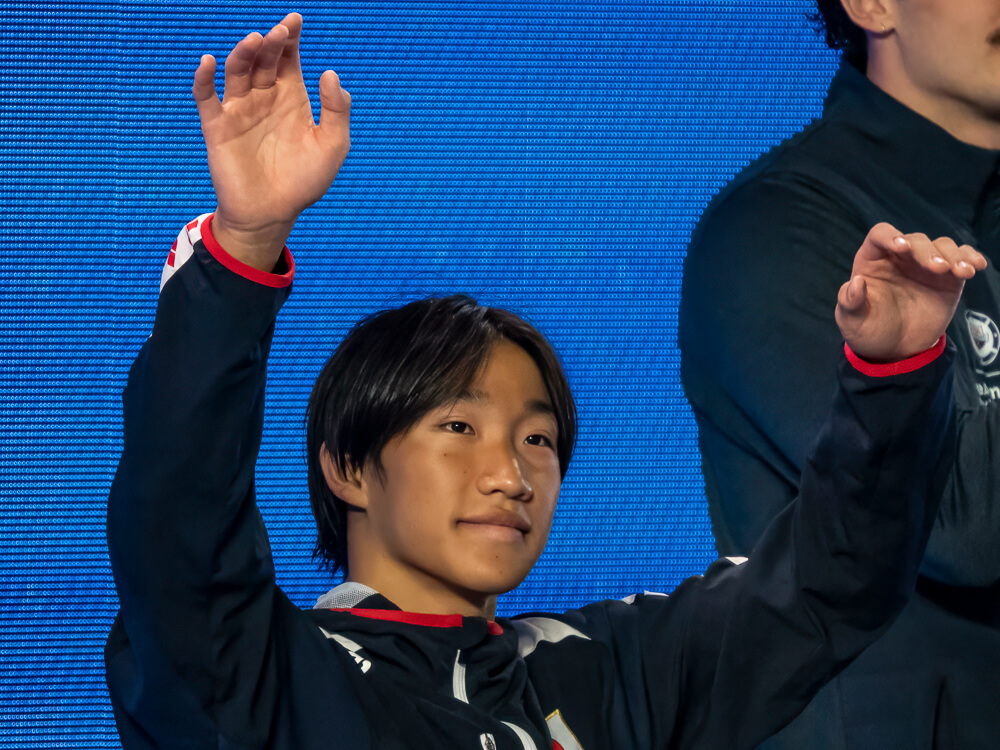















At 2:04.83, Shin Ohashi Provides Another Stunning Leap Forward in 200 Breaststroke
Two minutes, four seconds: a man really swam that fast over four lengths of long course breaststroke. Shin Ohashi, only 17, annihilated his best time by two seconds and beat the previous 200 breast world record by six tenths at the Asian Games. Shin was considered the man to beat in the event in the buildup to the 2028 Olympics, and he has only reinforced that status despite not yet competing at a senior-level global competition.
And remember, the 200 breast world record was hardly a weak standard. Since the conclusion of the supersuit era in 2009, seven different men had broken this record by a combined margin of 1.83 seconds, greater than the margin in any other long course 200-meter races for men or women.
Not long ago, 2:06 seemed otherworldly. After years of 2:07 as the magical standard for success in the event, going back to Japanese legend Kosuke Kitajima first achieving that time in 2008, Ippei Watanabe ripped a mark of 2:06.67 in January 2017. Watanabe achieved that time at a domestic competition with few around the world paying attention. Months later, Watanabe would be in the mix for medals at the World Championships, and he ended up with bronze as Russia’s Anton Chupkov became the first man to go sub-2:07 at a major meet on his way to gold.
Two years later, Australia’s Matthew Wilson matched Watanabe’s world record in the World Championship semifinals, only for Chupkov to blast the mark the next day on his way to a second consecutive gold. His time of 2:06.12 seemed nearly impossible, even as further 2:06s from Wilson and Watanabe suggested yet another new standard for success in the event.
The next few years saw Australian Zac Stubblety-Cook emerge as the world’s dominant swimmer in the event, a run that included an Olympic-gold-medal-winning mark of 2:06.38 in Tokyo. He held the reigns until 2023, when Qin Haiyang exploded onto the scene as the world’s top breaststroker. In Fukuoka, Qin became the second-fastest man in history in the 50 and 100 breast, behind Adam Peaty in both, and he blew away the 200-meter world record with a time of 2:05.48.
Qin has not come close to that time since, failing to reach the final of the event at the Paris Olympics and then swimming almost two seconds slower on his way to a World Championships gold in 2025. Leon Marchand did, though, becoming the second man under 2:06 in his gold-medal swim at the Paris Olympics. He memorably dominated the 200 breast hours after he dethroned Kristof Milak as the Olympic champion in the 200 butterfly.
Now, Shin has provided the next leap forward in the event. His 2:04.83 marks the fourth stunning drop in this event in a decade’s time, joining previous efforts by Watanabe, Chupkov and Qin. Overall, the mark has gone down by more than two-and-a-half seconds during that span.
Moving forward, Shin will try to break the pattern of 200 breaststrokers stagnating after breaking the world record. After their initial leaps to the top, none of Watanabe, Chupkov or Qin ever went after. In the 21st century, the only men to break the 200 breast world record more than once were Kitajima and Brendan Hansen, both of whom swam their best times in 2008 or earlier.
Shin, with youth on his side, is a good bet to break that drought. He has already wowed the world with his 2:04, and there could be more to come in the next few years.